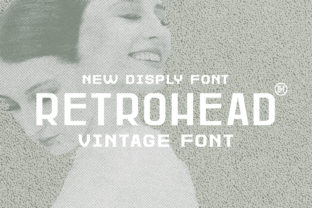
Retrohead Font: Elegant Sans Serif for Crafters
As a maker who spends hours perfecting the cut settings on my vinyl cutter and tweaking the margins on my printable templates, I know that typography is not just an afterthought. It is the voice of your brand. When you are selling handmade goods, whether they are soy candles, custom wedding invitations, or digital planner stickers, the font you choose communicates quality before the customer even touches the product. This is why I have become such a devoted user of Retrohead. It is a classic sans serif font that manages to strike a rare balance between simplicity and elegance, offering a unique charm that elevates everyday designs into something special.
The Visual Personality of Retrohead
In the world of Fonts, it is easy to get lost in overly decorative scripts or rigid, corporate-style typefaces. Retrohead sits comfortably in the middle ground. As a Sans Serif typeface, it lacks the small projecting features called serifs at the end of strokes, which gives it a clean, modern look. However, unlike many sterile modern fonts, Retrohead has warmth. Its lines are consistent, but there is a subtle softness to the curves that makes it feel approachable and handmade-friendly.
This visual personality is crucial for crafters. We need fonts that look professional enough for high-end boutique packaging but friendly enough for a birthday card. Retrohead delivers this duality. It feels curated and intentional, which helps build trust with potential buyers. When a customer sees a label with clear, elegant typography, they subconsciously associate that clarity with the quality of the product inside.
Practical Applications for Handmade Products
The versatility of Retrohead makes it a workhorse in my design toolkit. Here is how I integrate it into various physical and digital products:
- Product Labels and Packaging: For candle makers and soap artisans, readability is key. Retrohead works beautifully on small circular labels where space is limited. Its clean lines ensure that scent names and ingredients are legible even at small sizes. It also looks stunning on kraft paper tags for boutique clothing or jewelry, providing a modern contrast to the rustic texture.
- Wedding Stationery and Invitations: While script fonts often take center stage for names on invitations, a reliable sans serif is needed for the details. I use Retrohead for the date, time, and location text. It pairs effortlessly with flowing handwritten styles, grounding the design and ensuring that essential information is easy to read for guests.
- Home Decor and Signs: For those using Cricut or Silhouette machines to create farmhouse-style wood signs or acrylic wall art, Retrohead is a dream to weed. The spacing is balanced, meaning you do not have to worry about fragile connections breaking during the cutting process. It looks particularly chic in all-caps for minimalist quote boards.
- Digital Printables and Planners: If you sell digital downloads, such as habit trackers or meal planners, Retrohead provides a clean structure. It does not distract from the functional elements of the page but adds a layer of sophistication that free system fonts often lack.
Readability and Production Tips
When working with any premium font for physical production, testing is essential. With Retrohead, I have found that it maintains its integrity across various mediums. For vinyl cutting, I recommend checking the kerning (spacing between letters) if you are sizing the text very large for a banner. Sometimes, increasing the letter spacing slightly can enhance the elegant, airy feel of the font.
For printed materials like business cards or product inserts, Retrohead shines in black on white or white on dark backgrounds. Its uniform stroke width ensures that ink distribution is even, preventing the blotchy appearance that can happen with thinner, more delicate serif fonts. If you are creating SVG-style designs for heat transfers on tote bags or shirts, remember that simple sans serifs like Retrohead are less likely to have tiny details that peel off after washing compared to intricate script fonts.
Strategic Font Pairing for Brand Identity
A single font rarely tells the whole story. To create a cohesive brand identity, you need to master font pairing. Retrohead is an excellent anchor font because it is neutral yet characterful. Here are some effective combinations I use in my shop:
- Retrohead + A Flowing Script: Use a decorative script for the main headline or name, and Retrohead for the subtext. This creates a hierarchy that guides the eye. For example, on a wedding welcome board, the couple’s names could be in a swashy script, while the event details are in Retrohead.
- Retrohead + A Bold Serif: For a more editorial or magazine-style look, pair Retrohead with a strong serif font for headers. This works well for blog graphics or social media posts where you want to convey authority and style.
- Retrohead + A Handwritten Print: For a casual, friendly vibe, such as on children’s party invitations or playful stickers, pair Retrohead with a messy, handwritten print font. The cleanliness of Retrohead balances the whimsy of the handwriting.
Technical Considerations for Creators
Before purchasing any commercial font, it is vital to check the included files and licensing terms. Retrohead typically comes in standard formats like OTF and TTF, which are compatible with most design software including Adobe Illustrator, Photoshop, Canva, and Affinity Designer. Check if the font includes multilingual support if you plan to sell products internationally or create designs in multiple languages.
Also, look for extra features such as alternates or ligatures. While Retrohead is described as simple, many modern sans serifs include subtle alternates that can add a custom touch to logos or monograms. These small details can make your designs feel bespoke rather than template-based.
Finally, always review the license agreement. Most font creators offer different licenses for personal use, commercial use for physical products, and broader commercial use for digital templates or web design. Ensure you have the correct license for your specific business model, whether you are selling physical mugs, editable Canva templates, or SVG files. Investing in the proper license protects your business and supports the type designers who create these essential design assets.
Incorporating Retrohead into your creative workflow can streamline your design process while elevating the perceived value of your products. It is a tool that respects the craft, offering reliability without sacrificing style. Whether you are labeling a jar of homemade jam or designing a complex wedding suite, this font stands ready to deliver clarity and charm.